firecrackers, covering the entire cemetery in smoke and ashes, the echoing sound of firecrackers can be heard from miles away.
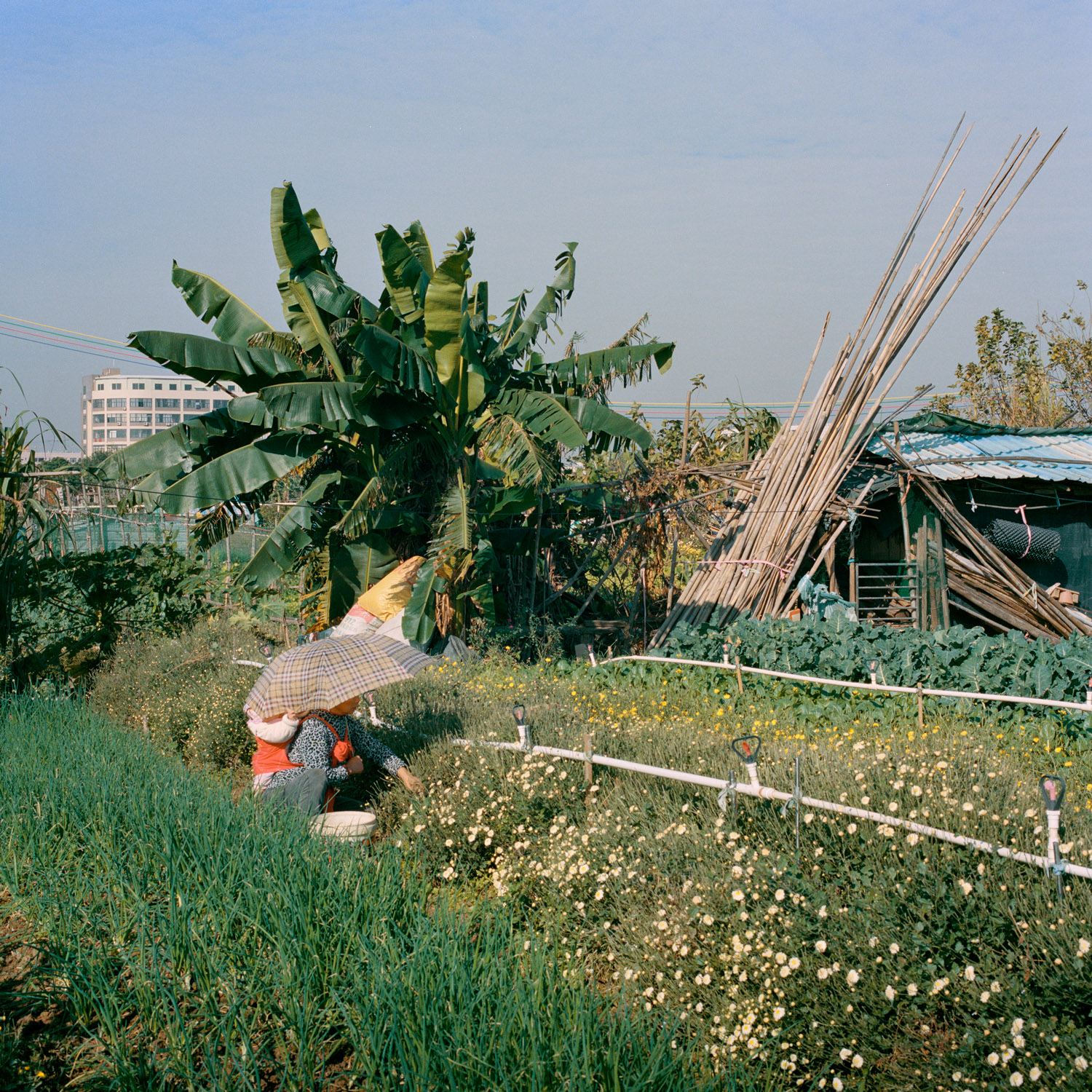
After spending many years abroad, Tony returned to his Cantonese hometown for his own photography project and took a closer look into the rapidly modernising town and the disintegrating infrastructure of spiritual life for the Cantonese Chinese community. The history, the traditions, and the past were quickly abandoned. Temples were torn down, villages and old towns were abandoned for high-rise apartments, and fields and ponds were transformed into concrete forests. There was
once a spiritual world full of magic, beyond life and death, in which we no longer believe. We may find ourselves drifting in rapidly changing life without understanding who we truly are, Tony believes, that’s our past, our ancestors, haunting us.
However, the ritual survives. Like many other young people, Tony once thought of such ancestor veneration ritual as superstition when he was a child. But now, it has become therapeutic and romantic. In a way, rituals help coordinate our collective memories, by establishing a shared system of symbols, a scripted play. It dispels our anxieties by forming a dialogue
with the past, a conversation between the profane and the sacred, and reminds us of who we are.
Tony Mak 麦明洋 (b. 1991) was born in Zhongshan, Guangdong. He graduated from Goldsmiths University of London. He works with mediums such as still images, films and explores on cultural landscapes, regional history and local communities. His photographic works often concern about conflicts between the past and the present, and humanities in
contemporary times. He was awarded British Journal of Photography International Photography Awards Single Image Winner (2022). His recent publication includes photo book ‘After The Olympics’ by Hoxton Mini Press, London.